
How Playgrounds Get Designed: The Real Process Behind a Community Play Space

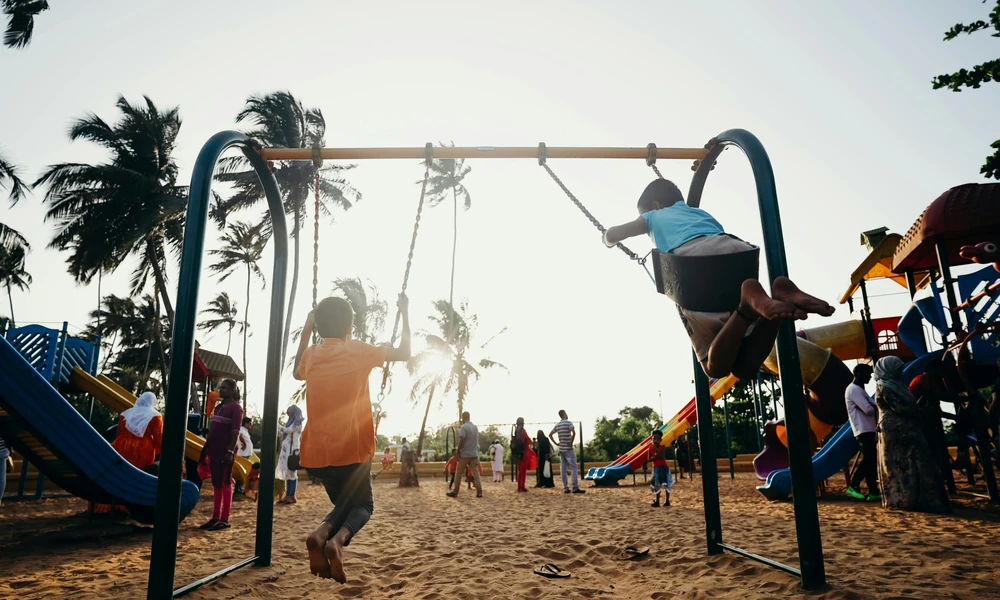
$300,000 can vanish in eleven months. That is the polite version of what happens when a PTA raises money for a playground and then spends a year discovering that the surfacing alone eats a third of it. I have watched three community builds from the first church basement meeting to the ribbon cutting, and the pattern never changes: the groups that fail are not the ones with the smallest budgets. They are the ones that picked equipment before they picked a site.
Here is the good news. A playground is not a mystery. It is a sequence, and the sequence has a predictable order that keeps the money and the timeline under control. This walkthrough covers the order, the standards behind it, and where community groups typically get stuck.
Start With the Site, Not the Slides
Your site dictates almost everything downstream, so look at it before you look at a catalog. Walk the property with a clipboard and note the boring stuff: where water pools after rain, where the sun hits at 2 p.m., where existing trees drop limbs, and how a maintenance truck would reach the space.
Drainage matters more than most volunteers expect. A playground is a hole in the ground’s natural water path, and a poorly drained site means surfacing that never quite dries, which means closures after every storm. Slope matters too. A grade that looks gentle standing on it turns into a reroute for the whole design once a ramp, an accessible route, and a swing bay occupancy zone get added.
I would rather see a committee spend a month on the site and a day on equipment choices than the reverse. Every decision you make later costs less when the site is already understood.
Write the Budget in Three Buckets
Most first-time budgets get written as one number, and that number is always equipment. Equipment is usually the smallest of the three buckets.
- Equipment and structures: slides, climbers, swing bays, panels, and shade.
- Surfacing and site work: engineered wood fiber, poured rubber, turf, drainage, grading, curbing, and concrete walkways.
- Installation and contingency: labor, delivery, inspections, and a line item for the surprises that always show up.
Community groups often assume volunteers can handle installation and save the labor line. Sometimes they can, for components with simple attachment systems and clear instructions. Complex structures with elevated decks and engineered connections usually call for certified installers, and the warranty terms sometimes require it. Ask before you assume, because a failed inspection costs more than the crew you skipped.
If you are raising money, phase the project. A shade structure and one quality play bay in year one beats a half-finished structure that sits behind a fence for two seasons. Park planning guidance from the National Park Service consistently treats phasing as normal practice rather than a compromise, which is a useful thing to tell a donor who wants the whole thing done at once.
Who Is Actually Going to Play Here?
Do not design for an imaginary average kid. Design for the real ones. A church with a weekday preschool and Sunday toddlers needs a different footprint than a neighborhood park with middle schoolers cutting through on bikes at 4 p.m.
Two questions settle most layout arguments. What ages show up, and at what times? Age grouping drives structure height, fall height, and the number of separate play zones. Timing drives sight lines and access points. If the space fills at pickup time, the accessible route needs to handle stroller traffic, not just wheelchairs.
Accessibility is not an add-on you price at the end. Inclusive play routes, ramp systems, and ground level activities change how a design flows, so they belong in the first sketch. Retrofitting them later means tearing out fresh surfacing, which is exactly as expensive as it sounds.
What Safety Standards Actually Require
Two standards govern almost every American playground you have ever used. ASTM F1487 covers equipment, and the Consumer Product Safety Commission publishes the Public Playground Safety Handbook, which is the plain language companion. If you only read one document before signing off on a design, read the CSPS one. It is free, it is written for non-engineers, and it answers most of the questions a committee asks.
The standard governs the parts nobody photographs: use zones, fall heights, entrapment openings, and handhold geometry. You can trace the practical rules in the CPSC guidance at CPSC.gov, and it is worth doing, because a vendor that waves off a use zone question is telling you something about how the rest of the project will go.
Surfacing depth is tied to fall height, not to whether the ground looks soft. Wood fiber compacts and needs topping up. Poured rubber needs a proper substrate and a clean installation window. Match the surface to the structure and the climate, and budget for replenishment on a schedule rather than as an emergency.
Materials: The Trade Nobody Warns You About
Steel, recycled plastic, and wood each have a personality once they are sitting in the sun for a decade.
Powder coated steel is the default for good reasons: it holds color, it takes heavy traffic, and replacement parts are easy to source years later. It also gets genuinely hot in full summer sun, which is a real concern in the Carolinas and points south. Recycled plastic lumber handles heat and moisture well and never splinters, but it flexes more and has a different visual character. Wood is warm and classic, ages visibly, and asks more of your maintenance crew.
Whatever you choose, think about the supply chain behind it. The USDA Forest Service tracks the wood products industry and timber supply at USDA.gov, and that broader market context is why composite and plastic systems have moved from niche to mainstream in public play spaces.
Here is where I have landed after watching projects go sideways: pick a manufacturer with a long production history and a real parts catalog, then pick the material that suits your climate and your maintenance capacity. A perfectly pretty structure with no replacement slides in five years is a liability, not an asset.
How to Choose a Partner Without Getting Burned
Let me give you a test I use, and you can steal it.
The Three Question Test.
- Walk me through the use zone for this exact configuration.
- Who signs off on the installation, and what happens if the inspection fails?
- Show me a project you built within 40 miles of here that has been open for three years.
A supplier who answers all three without deflecting is worth talking to further. A supplier who answers one and pivots to pricing is selling a product, not a project. Recreation suppliers with regional coverage often handle the whole chain, from drawings to installation, and that single point of responsibility is worth paying something for.
If you are working through that selection now, this is the stage where buyers comparing custom playground equipment in North Carolina options should ask how local installation and post-installation support actually work, because that question separates a regional partner from a national drop shipper.
Ask for references in your own climate. A build that performs in a dry state may behave differently in a humid one, and the company that built it knows the difference.
Installation Day and What Comes After
Install day is anticlimactic if the planning was right, which is the goal. Expect the crew to need clear access, a staging area, and a route for equipment that may arrive on a full size truck.
Expect a punch list, because there is always one.
The part most groups forget is what happens on day thirty. Inconsistencies and minor wear show up in the first month, and that is normal. Log them, photograph them, and send them to your installer while the warranty conversation is still fresh. Then set a real inspection rhythm: a quick monthly walkthrough by whoever mows the grass, and a deeper annual check against the safety handbook.
A playground is a fifteen year commitment wearing the costume of a summer project. Get the site right, write the budget honestly, design for the kids who actually show up, and pick the partner who answers hard questions without flinching. Then comes the good part: standing back on opening day while forty kids test your work at full speed.
What is the one thing on your site that worries you most right now?