


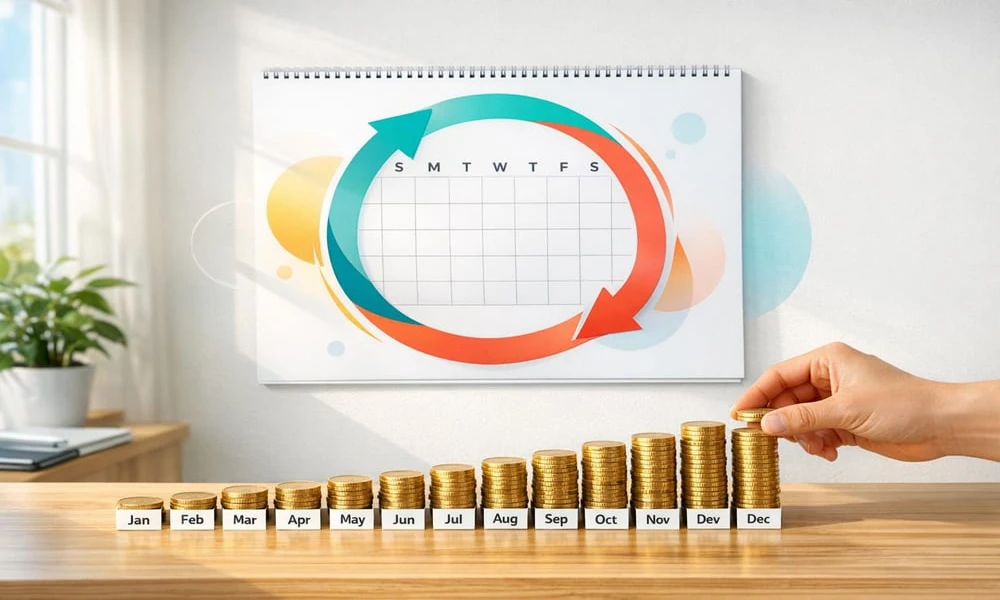

Donors deciding how to support a children’s charity in Singapore often focus primarily on how much to give, without necessarily considering that the pattern of giving, whether a single lump sum or a monthly donation in Singapore given consistently over time, can shape community outcomes quite differently. Both forms of giving genuinely help, but they support different kinds of programme planning and produce different operational realities for the organisations delivering the work on the ground. Understanding this distinction can help a donor choose the giving pattern that actually matches the kind of impact they hope to support, rather than defaulting to whichever option feels simplest at the moment of donating.
1. Predictable Funding Enables Longer-Term Programme Planning
A one-time gift, however generous, arrives as a single point of funding that an organisation must allocate carefully across current needs, since there’s no guarantee of continued support beyond that single contribution. A monthly donation in Singapore, by contrast, gives an organisation a predictable, ongoing funding stream that supports planning programmes over multiple years rather than one budget cycle at a time. This distinction matters considerably for child development initiatives, which often require sustained, multi-year commitment to produce meaningful, lasting results rather than the kind of short-term intervention a single lump sum might otherwise be limited to funding. A programme designer working with predictable, recurring funding can commit to a curriculum or mentorship structure that unfolds over several years, rather than constantly redesigning shorter initiatives around whatever funding happens to be available at any given moment.
2. Recurring Support Reduces the Administrative Burden of Constant Fundraising
Organisations relying heavily on one-time gifts often spend considerable staff time and resources on repeated fundraising campaigns to replace funding as it’s used, time and resources that could otherwise go directly toward programme delivery. A children’s charity in Singapore with a strong base of recurring monthly donors spends proportionally less effort on constant fundraising outreach, freeing up more organisational capacity to focus on actually running and improving programmes rather than continuously seeking the next round of funding to keep existing initiatives afloat. This shift in where staff time gets spent isn’t always visible to donors from the outside, yet it often makes a meaningful difference in how much of an organisation’s overall capacity goes toward direct impact versus the ongoing work of securing the next contribution.
3. Consistency Supports Deeper, Relationship-Based Community Programmes
Some of the most effective child development work involves building ongoing relationships with children and communities over years, not months, since trust, consistent mentorship, and sustained educational support tend to produce better outcomes than a single intervention delivered once. A monthly donation in Singapore that continues over an extended period supports exactly this kind of sustained, relationship-based programming, allowing an organisation to commit to a specific community for the years often needed to see genuine developmental progress, rather than needing to scale back involvement once a one-time gift has been fully spent. A mentor or educator who can return to the same community consistently, term after term, tends to build the kind of familiarity and trust that a rotating cast of short-term interventions simply cannot replicate, regardless of how well-funded any single intervention happens to be.
Which Giving Pattern Suits Your Situation?
| Consideration | One-Time Gift | Monthly Donation |
| Programme planning | Supports immediate or short-term needs | Enables multi-year programme commitment |
| Organisational impact | Provides an immediate funding boost | Reduces reliance on constant fundraising |
| Community relationship | Best for one-off interventions | Supports sustained, long-term engagement |
| Donor flexibility | No ongoing commitment required | Requires an ongoing, recurring commitment |
Choosing the Giving Pattern That Fits Your Circumstances
Neither approach is inherently better for every donor, since a one-time gift remains a genuinely valuable and appreciated form of support, particularly for donors unable to commit to an ongoing financial pledge. For donors in a position to commit smaller amounts consistently over time, however, a monthly donation in Singapore tends to provide a children’s charity in Singapore with the kind of stable, predictable funding that supports deeper, more lasting community outcomes than a single contribution alone typically can. Donors weighing this decision might find it useful to consider not just what they can afford to give today, but what kind of long-term change they’d most like their contribution to support.
Contact World Vision International Singapore to learn more about setting up a monthly donation and how recurring support shapes our long-term community programmes.
